April 15, 2012

Homemade Kanban - How to make it last?

Agile@Home :


After understanding Agile and Scrum, the first question that parents ask is, "will it last?"
Have you ever asked yourself that?
I asked myself the exact same thing when I first started this. Then I started to think about, why did it last, and what were those things that didn’t last. What did we gain out of this?
But first things first. As a parent how do we make things last with kids?

I say, if you want it to last, make it last, just know when to let go. It's not really different from any other educational or behavioral skill I want my child to gain.
Let's say, you want your child to go to school every day. You will make sure it happens. You believe it is important, or you appreciate the value, or it’s the law.
So now we apply this to the task board. You’ve already found this method interesting, and you know the value, and you are already thinking about implementing it.
Then it will last longer.

So first - Believe in the expected outcome. Children can feel when you believe in something (and when you don’t). Make sure both parents agree about it, as it will last longer.
I personally believe that like everything that’s 'fun' or more like a "game" lasts more with kids than something that’s perceived as ‘boring’. Kanban at home can be lots of fun for kids, as it has colors, boards, notes, ideas, dialog, empowerment ……… and a lot of attention!
Speaking of attention. Remember, we emphasize the family dialog above every thing else. The great value besides 'getting things done' is a family dialog. This dialog should last above all.

What happens is that once the task board and tasks are routine, many recurring annoying tasks are not an issue any more, as we manage and control them as part of the family routine. Once out of our way, we have time to deal with the really important stuff.
The task board is then filled up with more important stuff that the kids and the family want to share and accomplish. Issues at school, fun days, exams, family projects and more.


So sometimes you may find that you aren’t using a task board any more, but you ARE having a healthy daily dialog between the kids and the parents. And things are getting done around the house and for your kids. They achieve these values using wonderful Kanban tools - visibility, the ceremonies (daily, retrospective, planning), and so on.
Whenever we think that we need the Kanban board again, we just start using it again. There are many things we can apply the same method to. Cooking together; birthday party preparation; learning to an exam; cleaning the house tougher or planning a trip; TV schedule; whatever.

So I think it lasts as long as we see the value. And it's perfectly OK to stop and say that we don’t need it anymore, and if we have a specific need, start up a board again.
Applying Agile tools is, for example, having a daily meeting, visualizing your tasks, getting things done, looking ahead and planning, looking backward to see if you can do it better next time and learn. Communication is key.
The task board is just the means to make sure those things last.

After all, succeeding with Agile has a lot to do with mindset.


April 08, 2012

The Power of Sticky Notes

Agile@Home :

These small squares that we stick on a board or on a wall, have power.

When we are trying to manage our time, and deal with the fact that we need to get things done.

Or when a group is talking about a subject they have more than three things to say about.

You can find these sticky notes all over your house, your office, even your computer, but do we acknowledge their real power?

Long before I was introduced to Agile and Kanban, I used to write everything down on notes, especially small square ones. One day, when I was still in my quality management role, I was introduced to the sticky ones.

Small, colorful, stick-to-anything notes.

I was hooked.

For someone with “ADHD” like me, these sticky notes were incredibly useful for figuring out where I put what and how to remember everything I need to do.

Pen and paper have always been the fastest way for me to express ideas, much faster
than any computer software, and of course, "The opposite of forgetting is writing down”. Combining this with a pack of sticky notes brought order to my day to day schedule.

Of course, it wasn’t that before my day was chaos. I managed my day and my tasks without sticky notes, but there’s no question that they helped make it much easier for me, and freed up valuable time for other tasks.

So what makes the sticky notes so powerful?

The first thing comes to my mind when thinking about the power of sticky notes is visibility.

Visibly is not just about writing it down. Visual thinking is already well known to be a powerful tool. So with sticky notes, I can write things down, put them where I can see them, and see my entire wish list, or the list of things I need to do or realize.

This is the first step in organizing my day to day activities.

With sticky notes, it's easy.


Now, when I have everything visual in front of me, I can start making choices.


I can start decide what I want to do and when. I can start moving those sticky notes around and checking myself before deciding on the 'path' I wish to take. I can even free some space to add more few things into my wish list.

My ideas are right in front of my eyes, so why not play with them? Add some colors, change their order around, add notes, group or sort them. This helps get some sense of them, and it is a pretty easy way of making choices.

It’s also a simple way of sharing my ideas with other people. When you put your ideas on sticky notes as a group, it’s an excellent brainstorm visibility tool, as well!

This is an amazingly simple way to help get things done.

So we visualize the things we want to do , and play around with them a bit. Now, we just need to do them, right?

So the last step you can do now is place those stick notes on a simple three column board, and visualize your way through having those ideas become a reality.


Sound familiar?

Since you can now see your ideas and how the tasks are moving forwards with your sticky notes, you can add, change and get early feedback over your own progress, maybe even change your ideas to adapt to your needs.


With kids at home, there is a lot of fun using sticky notes to get things done, and it’s pretty much the same way. It's just that the content of the sticky notes is different.

You can manage almost any chore with sticky notes. Simple day to day activities, chores around the house, your children’s schedule, your family trip, personal tasks, and huge software projects.


The funny thing I have noticed, over the last few years, that even task management software looks more and more like a board with lots of sticky notes.

See?! It sticks!

Ho… and don’t forget to have fun on the way…


April 02, 2012

The fun of agile, it's the "getting things done game"


I have recently read this presentation, i know, it's from the industry but it really has a lot to do with agile, especially at home. (you can skip some of the technical stuff).

I love the  idea it presents :  fun helps to get things done. Games are the ultimate fun tool (if designed to fit the customer needs).

Agile at home for kids and families is similar to a fun family game. It happens every evening. We have sticky notes, colors, moving stuff around the Taks board, discussing openly the rules and doing it as a family.
When thinking of it , when we apply the agile into the organization development teams , if its not fun , it will not work (at least not to optimum).

So , as I say most of the times… don’t forget to have fun while you are doing it.


April 01, 2012

Home Kanban board…. Swift Kanban software

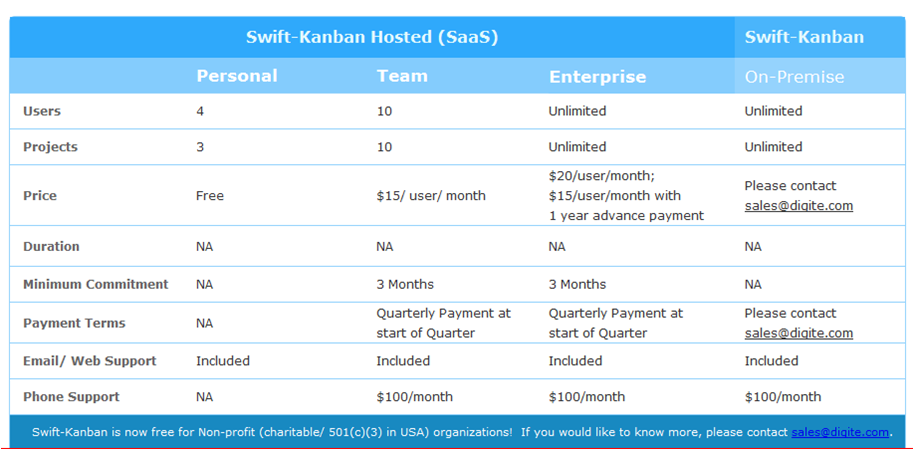
Awesome Free of charge home Kanban board…. Swift Kanban software
People, who know me, know I prefer the good old-fashioned white boards and sticky notes over software tools, but even I stumble across tools that I find really useful, giving that extra edge to practicing Agile at home with our kids.
Don’t forget! A tool does NOT replace our direct communication. The tool just helps make our tasks even more visible, it is not a goal in itself.
I find Swift Kanban  a very useful tool for home made Kanban, it consists of a simple Kanban board, with colorful tickets and customizable flow. We can actually create our own house tasks board, with whatever columns we prefer, and assign tasks to our family.

The Swift Kanban interface has a good feel and flow to it - it’s easy to get to the different areas you need, and it’s flexible enough to let you customize it, without having to figure out complicated routines and rules.
What can we do with it ?
  •  Create tasks of different types.
  •  Add family members to those tasks.
  • Have shared tasks on a member’s tasks.
  • Define Due date for tasks.
  •  Drag and drop tasks as we wish.
  • Add our picture
  •  Add attachment
  • Colors
  • And many more….


I love it!

Limitation:
Free Limited to 4 users

Enjoy :)

March 25, 2012

Operating a task board in 10 min

Agile@Home :


Materials:
v  Sticky notes
v  writing implement (pen, pencil) , marker pen
v  Board / wall. Window


:Start simple
v  Introduce the idea to the kids
v  Remember that it should be a fun game
v  Encourage the kids to take an active part
v  Kids are the ones building the board

Start with the simplest board
3 columns
v  To do
v  In progress
v  Done

.Add tasks to the board
v  Start simple. With the most simple one or two tasks

.Pull tasks according to what you need to do


.Set tasks priority and make sure to move tasks according to their priority


.Pull – Not push


You can add an impediment column if you like


!!!Don’t forget to have Fun

Thank you the greatest family for your pics J


March 18, 2012

Time management games, multitasking and Agile

OK, I confess, I can find the Agile connection in nearly everything. It’s just that practising Agile at home is not just a fantastic communication tool, it also teaches us how to manage ourselves better, more goal oriented and effective.

In one of my earlier posts, I explained how we should manage our task lists better, and see what needs to be done, using the Eisenhower Method. The Eisenhower Method is a basic time management method.

Today, I’d like to suggest we play games. Yes, I said games. Computer games, that do nothing but make your kids spend hours in front of a screen.

Apparently, that’s not true. Really.

When I started to look more into games that seemed a complete waste of time, I noticed that some of them have serious aspects of how to be effective and manage your time in the best possible way.

I believe that experience is built from training, and intuition is built on the ability to make choices, to ‘feel’ what’s right, based on previous experience. And these games, that consist of a message and constraints, such as ‘manage a pizzeria’, are exactly that. These games force us to practice our efficiency and speed, to focus, and to achieve our goals. The game trains the player to be goal-oriented, but also effective, teaching you something that you can’t learn just from talking about it, and it’s no secret that children learn the best by playing. So do adults, by the way.

So stop bothering me. I’ve got pizza to make.


"Refurbish a rundown castle and turn it into a pizza palace! Armed with their secret family recipe, Rebecca and Robert are out to build a successful pizzeria franchise. Save money to spend on new appliances, better menu items or developing their skills. Accumulate enough to open a second location in an even more unique setting. Restaurant management has never been so fun!
·       
  • Multi tasking demanding high efficiency to serve a lot of customers with the right order and the right time.
  • Grow your business - Buy new items and upgrade your restaurant
  • Set up higher  goals every round
  • Explore 50 challenging levels"


More games:


March 11, 2012

How to decide what to do? – Another way to order the ‘To-Do’ column


Lets say we have a lot of issues at hand, and we need to decide what to do first. The catch here is, that we need to decide as a group (we’ve already discussed the benefit of a group and empowerment before). The group leader (teacher/ manager) agrees that the best way to have an assignment completed in the best possible way, and get people highly motivated and have fun, will be to allow the team/class to decide on their own.

But we have so many issues at hand and only a short time frame to make our decision. So  how are we all going to agree in, say, an hour?

Imagine we are in a classroom where the class has tons of many social assignments, from which they need to pick just two activities that will benefit the entire school and probably win them a prize. But again, there’s a catch. What if they don’t win? Well, even then, at least they had fun and achieved the feeling of success and accomplishment.
The technique, a simple sort of brain storm that I’ll show you, is a very common "game" we play almost in every implementation in the industry or wherever. In fact, I even remember playing it when I was in the Girl Scouts.
So why not try it out at home or in the class room?!
So ,We have a huge list of idea we want to achieve.

1.       Ask the each class/ team member to offer two ideas and write them down on a sticky note.

Paint the school fence
Build a Muskie over in the lobby
Clean the tree area
Have an party during one of the breaks
 Create an hour of fun for first grader
Build a coffee shop for the next parents day


**No one can object to a team member idea at this point.

2.       Once every one is done , each team member has ten seconds to present his idea and place it on the board in the order of its importance.
3.       If more then one team members have the same idea, they add their note to the note already on the board.
4.       Each team member in his turn will  add his note to the board and place it according to the priority he thinks it has.


5.       The next step  may be done in two different ways:
a.        The ideas that got the most votes are selected.
b.       We can ask each team member to grade the ideas 1-5, (or whatever points we like to use) and see what two ideas got the most points.
6.       Discuss the ideas selected: drill down into practical tasks.
7.       Examine again the effort of this idea selected vs. the effort needed. Do we still want this idea or not?


The point is that
1.       We have an open discussion.
2.       Everybody’s  ideas are visible.
3.       We select the ideas as a group.
4.       We can change our mind after we have selected an idea.
5.       And, we can do this every time we have lots of things to do. A project can be a trip or a birthday party , or an event or something we are planning to do, and there are always more than one way to do things.
a.       Place the high priority ideas higher , and the rest of assignments as a wish list inside your backlog.
b.       We now have a visibility over more then only two things we wish to do.


A trip to San Diego


March 04, 2012

The Four Quadrants of the To Do list

Stick to the important, before it becomes urgent.

Here’s another way to manage the ‘To do’  list when there are many tasks that need to be taken care of , immediately, or in the long run. This method is also very useful when we find ourselves doing nothing but putting out fires. 

Instead of just putting out the fires, and constantly chasing after the daily tasks, we should stop for five minutes, and even without knowing time management theories, simply present our tasks in a visual way. That way we can start working on what’s REALLY important, and stop the constant crisis breaking out.

So what DO you do?
Start off with KISS. Keep It Simple.
Now, how can we manage the task list better?
Let’s divide our tasks into four, like below:


Now, start adding your tasks to the board, each task according to how important and urgent it really is.
(Of course, when it comes to Agile Kids, we do this as a family).
This way, the task board appears much clearer, and we know what needs to be done.
This is known as the Eisenhower Method.


Now, when you want to complete a task, just follow these simple rules to determine if it’s REALLY what you need to do next.

1.     Stick to the important
Sometimes you find that what’s really important as a family - like reading a book to your children, or talking to them - isn’t urgent, so it keeps getting postponed. Don’t forget that what you don’t do today, will come to haunt you in the future as a crisis. So if the task is important  - make sure you complete it. 

2.     Start with those that are due soon and assign them with a date and an owner.
3.     Then work on those tasks that may be due later.
4.     Delegate urgent and non important issues.
5.     Make sure to review your tasks from time to time and see if their position in the four quadrants has changed.